Research

Learning in open-ended environments through efficient exploration and computation, prediction and decision under uncertainty, and continual model evolution.

Learning in Open-Ended Environments

My research asks how learning systems should operate when interaction changes both what they know and which problems become relevant. I use open-ended environments to describe settings in which new tasks, hypotheses, or solution strategies can emerge as interaction produces new evidence and operating conditions change. Such systems repeatedly face three coupled questions: What is worth exploring or computing? What does the available evidence support? What should change in the model as new experience arrives? Exploration and interaction produce evidence; evidence supports or challenges predictions and actions; learning from that evidence revises the model that guides subsequent exploration. My research develops methods for each part of this loop and studies how they interact under bounded computational and verification resources.

Core Research Questions

Efficient Exploration & Computation

What is worth computing or exploring when candidate computations and interactions differ in cost and information value? I develop methods that concentrate computation where it can most improve what a system knows or decides. Across model construction, inference, and reasoning, my work studies adaptive rather than uniform computation: how to build compact and specialized models, how much computation to spend at inference time, and which candidate paths deserve further exploration. Representative threads include adaptive inference, sparse and distilled models, architecture search, dataset-efficient learning, and efficient reasoning.
Prediction & Decision under Uncertainty

What does the available evidence justify when a system must predict or act under distribution shift, partial observation, or model uncertainty? My work studies how confidence, robustness, and evaluation should reflect the evidence available to the system, and when more information or verification is needed before a consequential decision.

A longer-term focus is assurance at scale: as machine-generated results and candidate actions outpace direct expert review, verification should be selective and sensitive to uncertainty and consequence. In physical systems, the same question asks whether a predictive model captures enough of the environment and the consequences of action to support planning. World models instantiate this broader problem in embodied settings: what must be represented to predict action consequences, and when are those predictions sufficiently supported for planning and action?

Continual Learning & Model Evolution

What should remain stable and what should change when new evidence, tasks, or operating regimes arrive? I study how models can incorporate useful information and capabilities while preserving knowledge that remains valid and respecting bounded memory and update resources. This includes sparse and modular adaptation, dynamic memory, and continual learning.

The central problem is stability–plasticity under constrained capacity: useful change should not produce uncontrolled forgetting, accumulated errors, or unbounded growth. The updated model in turn changes what is worth exploring, which predictions remain well supported, and what evidence should be acquired next.

How these questions connect

Selective exploration determines what evidence is acquired; prediction and uncertainty determine whether that evidence supports an action or model update; continual evolution determines how learning from that evidence changes the model and the next round of exploration.

Open-Ended Research Settings

I study these questions across scientific, physical, human, and computing environments in which interaction changes both the evidence available to a system and the decision it should make next.

Scientific Discovery & Autonomous Experimentation

Scientific discovery makes the exploration–evidence–revision loop explicit: the next experiment or analysis changes what can be learned, measurements are uncertain and often costly, and new evidence can change which hypothesis or experiment is most informative next. My collaborations in materials discovery, microscopy, and ocean science use these settings to study experiment selection, interpretation of uncertain observations, model revision, and evidence for scientific conclusions. Self-driving laboratories instantiate this closed loop particularly clearly. Their significance for my research is broader than laboratory automation: they provide a physical setting in which hypotheses guide experiments, measurements update predictive models, and those models determine what should be tested next.

Embodied & Multi-Robot Systems

Physical systems must reason about the consequences of actions under partial observation and changing environments. My work in multi-robot perception and coordination uses this setting to study distributed perception, predictive modeling, planning, and adaptation as interaction generates new experience. The underlying question is broader than any particular world-model architecture: what aspects of the environment must a learning system represent to predict the consequences of action, which possible futures are worth considering, and when are those predictions sufficiently reliable to support physical decisions?

Human Learning & Creative Exploration

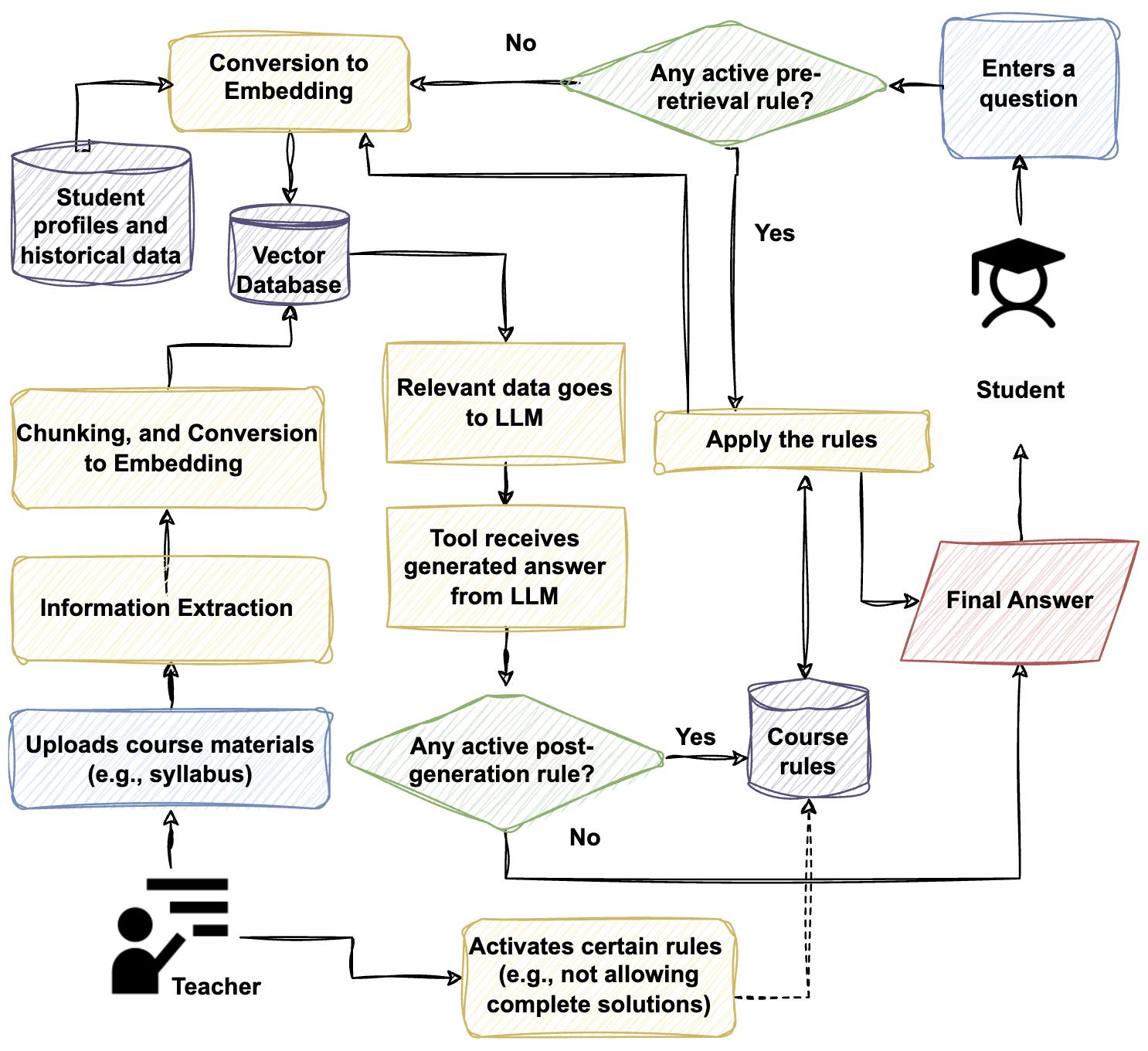
Education and creative work often admit multiple valid trajectories, while the appropriate form of assistance changes with the learner, context, and evolving goal. MerryQuery and ArtAlgo provide settings for studying adaptive assistance, evidence-grounded interaction, exploration, and learning without assuming a single fixed answer or solution path. These environments also expose a distinctive form of open-endedness: interaction changes not only what the AI system observes, but also what a person learns, creates, and chooses to pursue next.

Networked & Computing Systems

Networks and computing infrastructure change in workload, configuration, and operating regime while imposing explicit constraints on latency, capacity, and reliability. My work in wireless systems, Open RAN, network simulation, and high-performance computing uses these environments to study adaptive decisions and model updates under concrete operational constraints. Across these settings, Gentopia provides a complementary systems framework for studying how specialized AI capabilities can be composed and reused as problems change.

Representative Work

Adaptix

AAAI 2025 Oral

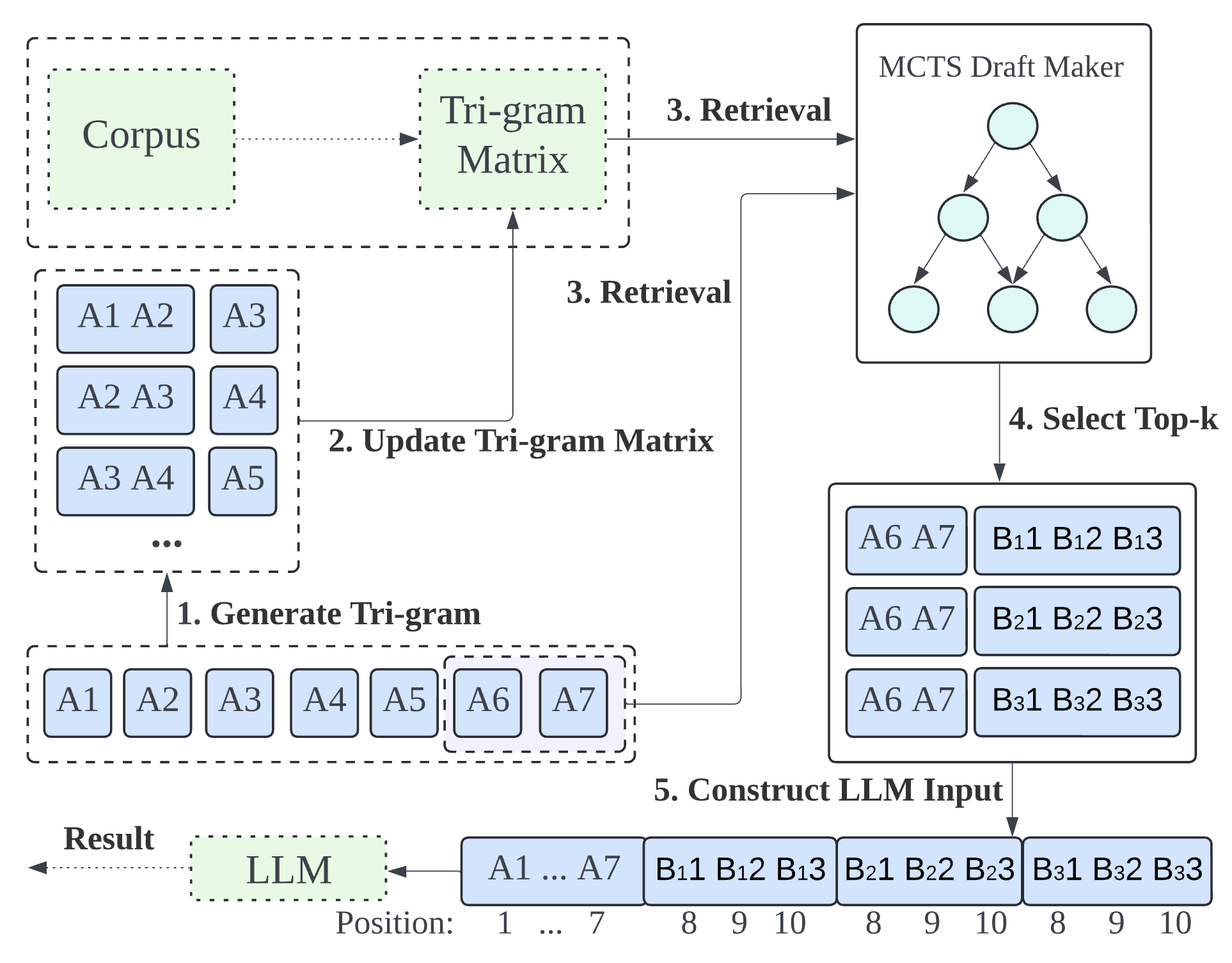
MISSION: To revolutionize LLM decoding with adaptive, compute-optimal strategies and test-time learning

  • Fine-Tuning-Free Efficiency: Achieve 2.5x speedup without the need for fine-tuning
  • Dynamic Adaptability: Align token predictions with evolving output distributions in real time
Adaptix

Gentopia

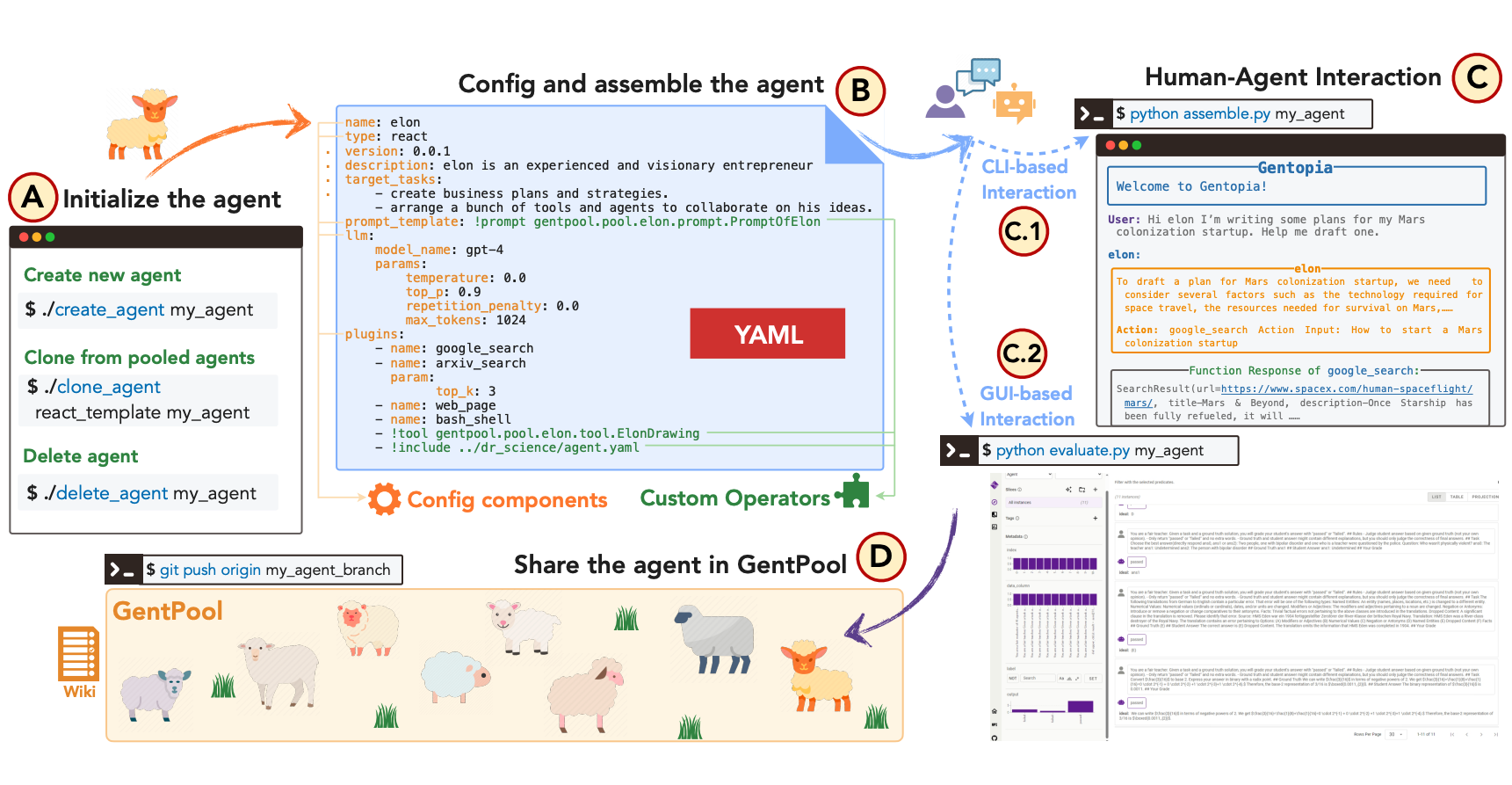
MISSION: To build artificial general intelligence through collective growth of generative intelligent agents

  • Demo I (Create Agents)
  • Demo II (Customize and Interact with Agents)
  • Demo III (Evaluate Agents)
Gentopia

MerryQuery

Best Demonstration Award

MISSION: To reshape next-generation education through trustworthy generative AI technologies

  • Innovations: ① Trust & Transparency, ② Dynamic & Controllable, ③ Multimodal & Multifunctional
MerryQuery